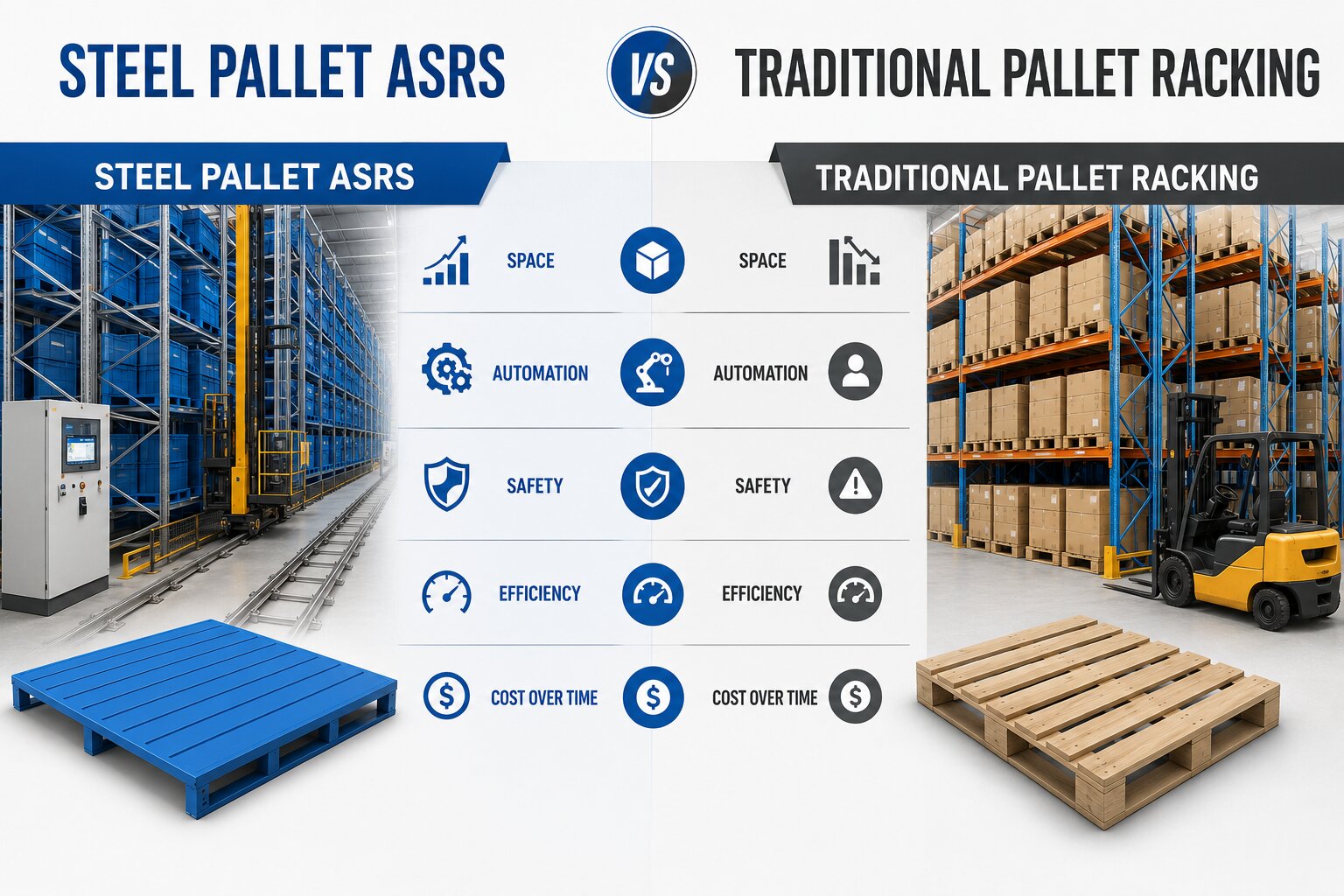
When you are moving tons of material every day, the pallets under your load are just as important as the forklift carrying them. A sudden pallet failure can damage goods, halt production, or even worse cause serious safety incidents. For heavy-duty industrial use, the most common debate is metal pallets vs wooden pallets.
Both are widely used, both have strong advantages, and both can support heavy loads if designed correctly. But they don’t perform the same way in every environment. This guide breaks down the real-world differences using actual data, so plant managers, warehouse heads and procurement teams can take a clear, numbers-backed decision.
Why Pallet Choice Matters in Heavy-Duty Operations
In high-load environments like automotive, engineering, steel, chemicals, pharma, and 3PL warehouses, pallet choice impacts:
• Safety: Overloaded or damaged pallets can collapse under racking or forklift movement.
• Cost: Frequent pallet breakage leads to replacement costs, repair expenses, downtime, and possible product damage.
• Compliance: Industries like pharma, food, and chemicals must meet strict hygiene, fire, and export standards.
• Automation: AS/RS systems, conveyors, and automated racking require uniform, rigid pallets.
That’s why the pallet is not just a “wooden platform” or “steel frame” — it’s a critical component in your material handling system.
Quick Overview: Wooden vs Metal Pallets
Wooden Pallets
•Traditionally dominate the market due to low upfront cost and easy availability.
•Wood pallets account for around 55% of global pallet market revenue share thanks to their cost-effectiveness and recyclability.
•Commonly used for FMCG, e-commerce, general manufacturing, and one-way shipments.
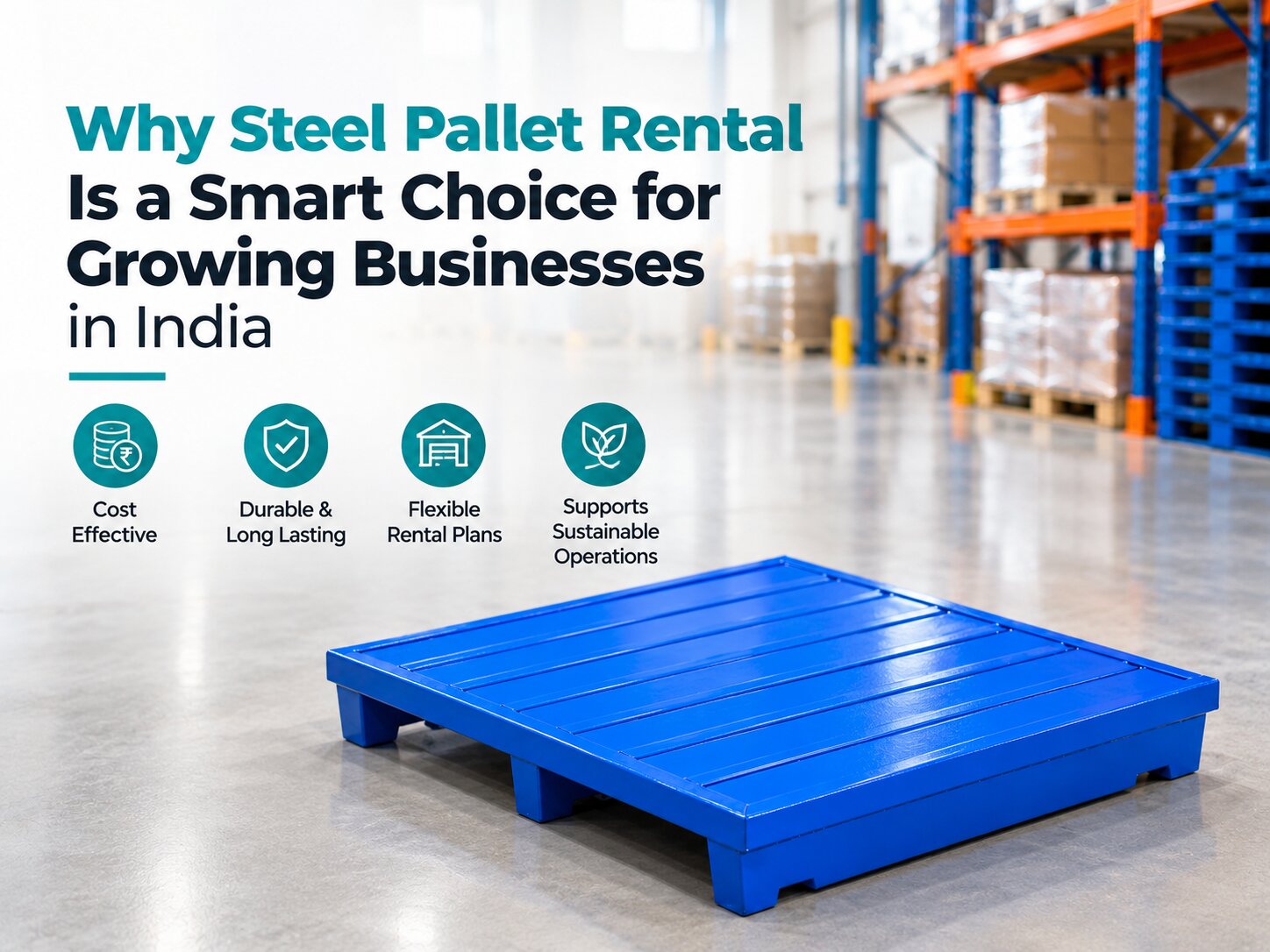
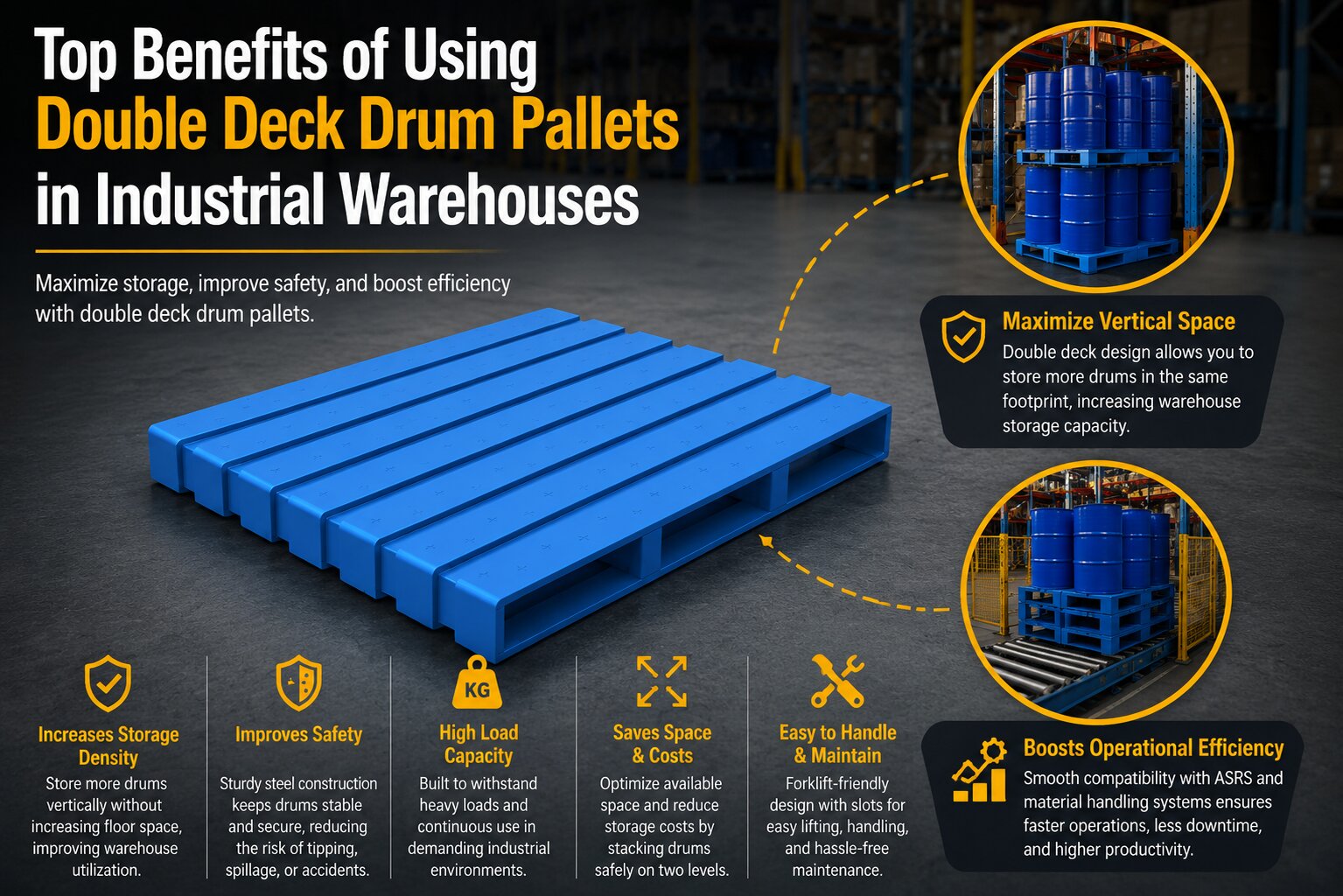
Metal (Steel) Pallets
•Designed for heavy-duty and high-cycle industrial applications.
•Suitable for very heavy loads, high racking, harsh environments, and where hygiene or fire safety is critical.
•Often used in automotive, engineering, foundries, chemical and high-bay automated warehouses.
Data-Backed Comparison: Load Capacity, Lifespan & More
Below is a simplified, data-based comparison of wooden and metal pallets used for heavy-duty applications. Values are typical ranges from manufacturers and industry sources (actual numbers vary by design and spec).
1. Load Capacity & Structural Performance
For heavy-duty applications, load capacity is usually the first filter.
• Wooden Pallets
•Standard heavy-duty wooden pallets are commonly rated around 1,000–1,500 kg, and in some cases up to 2,000 kg depending on design and timber quality.
•EPAL Euro pallets, for example, are specified with a safe working load of around 1,500 kg in dynamic conditions.
Metal Pallets
•Heavy-duty steel pallets often offer 1,500–5,000 kg static load and around 1,000–2,500 kg dynamic load, depending on deck and frame design.
What it means in practice:
If your process involves very heavy components, dense metal parts, or deep racking, metal pallets provide a stronger safety margin. Wooden pallets can handle heavy loads too, but they may require thicker boards, special designs and more frequent inspection.
2. Durability, Lifespan & Total Cost of Ownership
•Studies and industry reports suggest a wooden pallet can last around 5 years or roughly 10–15 cycles in typical conditions if handled properly and repaired regularly.
•A metal pallet can last around 10–15 years under similar use, providing roughly double or more lifecycle in many cases.
At first glance, a steel pallet may cost 2–4 times more than a wooden pallet. But if:
•It lasts 2–3 times longer,
•Carries heavier loads safely, and
•Reduces product damage and downtime.
Then the cost per use often becomes lower for metal pallets in heavy-duty, high-throughput environments.
3. Safety, Hygiene & Compliance
Safety
•Wooden pallets can develop splinters, loose boards, and protruding nails, which can injure workers and damage products.
•Metal pallets provide higher structural integrity and are less likely to break suddenly under load.
Hygiene & Cleanability
•Wooden pallets can absorb moisture, chemicals, and oils, and they may harbour pests or mould if not treated correctly.
•Metal pallets have a non-porous surface, easier to wash and disinfect, which is useful in pharma, food, chemical, and clean environments.
Fire Risk
•Wood is combustible, adding to fire load in warehouses.
•Steel pallets are non-combustible, which can be an advantage in fire-sensitive areas or where fire regulations are strict.
4. Environmental & Sustainability Considerations
It’s a common misconception that metal pallets are “less sustainable” than wooden pallets. The reality is more nuanced.
•Wooden Pallets
•Use a renewable material and are widely repaired, reused, and recycled.
•Many life-cycle assessments show that reuse and repair significantly improve their environmental performance.
•Metal Pallets
•Require more energy to produce initially, but
•Offer a longer lifespan, and at end-of-life, steel is highly recyclable with a well-developed scrap market.
•From a circular economy perspective, both can be sustainable if:
•Wooden pallets are run in repair + reuse loops.
•Metal pallets are used for many years and recycled at the end.
For heavy-duty, high-cycle operations, steel pallets can actually be a very efficient use of materials over their longer life.
5. When Wooden Pallets Make Sense for Heavy-Duty Use
Despite all the advantages of metal, there are scenarios where heavy-duty wooden pallets are still a good choice.
• Tight budgets / cost-sensitive projects where upfront cost must be minimal.
• One-way shipments or exports where pallets won’t return.
• Mixed load profiles, where not every pallet needs extreme capacity.
• Shorter-term projects where the lifecycle advantage of steel can’t be fully realized.
In such cases, using a higher grade, heavy-duty wooden pallet with proper specification, quality control, and a repair program can give you reliable performance.
6. When Metal Pallets Are Clearly the Better Choice
Metal (steel) pallets typically outperform wooden pallets when:
• Loads are extremely heavy or dense – like castings, steel coils, heavy components, or filled drums.
• High racking is used – where pallet deflection and consistency are critical for safety.
• Automation and AS/RS systems require a very rigid, dimensionally stable pallet.
• Hygiene is critical – pharma, chemicals, food ingredients, clean warehouses.
• Frequent reuse and internal loops – where the same pallets are cycled tens of thousands of times.
In these environments, the extra lifespan, strength and safety of metal pallets usually justify the higher initial investment.
| Feature | Metal Pallets | Wooden Pallets |
|---|---|---|
| Material | Steel or aluminium | Natural wood (usually softwood or hardwood) |
| Strength & Durability | Very strong, withstands heavy loads and harsh conditions | Strong but prone to damage, warping, and cracking |
| Load Capacity | High load-bearing capacity | Moderate load capacity |
| Hygiene & Safety | Easy to clean, resistant to pests, moisture, fungi | Absorbs moisture, attracts pests, potential splinters and nails |
| Longevity | Long lifespan, low maintenance | Shorter lifespan, frequent repairs needed |
| Environmental Impact | 100% recyclable, eco-friendly due to durability | Biodegradable but often chemically treated |
| Cost | Higher initial cost, lower lifecycle cost | Lower upfront cost, higher long-term replacement cost |
| Typical Use Cases | Heavy industries, pharma, food, automotive | General shipping, light to moderate loads |
| Weight | Heavier | Lighter |
| Fire Resistance | Non-combustible | Flammable |
| Repairability | Difficult, usually replaced | Easy to repair with nails and wood pieces |
Choosing between metal and wooden pallets depends on your industry requirements, budget, and long-term goals.
• Metal Pallets are ideal if your business prioritizes strength, hygiene, durability, and long-term savings. They are non-combustible, resistant to damage, and have a longer lifespan.
• Wooden Pallets serve well for short-term, light-duty, or disposable use, and are easier to repair, but come with the disadvantage of being flammable, moisture-absorbent, and more prone to damage.
At Stakall LLP, we specialize in manufacturing durable, high-quality steel pallets ASRS designed for modern industrial needs. If you're considering upgrading your storage or material-handling systems, feel free to reach out for customized solutions.
Conclusion:
If your operation involves very heavy loads, frequent reuse, high racking, or strict hygiene and safety requirements, metal pallets usually win on total cost of ownership, reliability and safety. If your requirements are moderate, with lower load ranges, shorter life cycles, or one-way shipments, properly specified heavy-duty wooden pallets can still be a practical and cost-effective choice.
Contact Stakall today to discuss your load capacities, storage system and future expansion—our experts will help you choose the right metal pallet solution for long-term performance and cost savings.
Frequently Asked Questions (FAQs)
Q1. Are metal pallets always better than wooden pallets?
A1. Not always. Metal pallets are better for heavy-duty, high-cycle and high-risk environments, but wooden pallets can be more economical for low-to-medium loads, one-way shipments, or short-term projects.
Q2. Do metal pallets reduce product damage?
A2. Yes, in many cases. Because steel pallets are stiffer and more dimensionally stable, they reduce the risk of deckboard breakage, sudden collapse or excessive deflection in racking, which can damage goods. However, corner and base design should still match the type of load.
Q3. Can wooden pallets handle heavy-duty loads safely?
A3. Yes, heavy-duty wooden pallets can safely handle 1,000–2,000 kg or more, provided they are correctly designed, manufactured from quality timber, and inspected regularly. The risk is that poor-quality or damaged wooden pallets are sometimes reused beyond their safe limit.
Q4. Which pallet type is better for export shipments?
A4. For one-way export shipments where the pallet won’t return, wooden pallets are usually more economical. But they must meet ISPM-15 requirements (heat-treated / fumigated) to prevent pest issues. Metal pallets are used when the same pallet is expected to re-enter your loop multiple times.
Q5. Are metal pallets compatible with normal forklifts and pallet trucks?
A5. Yes. Most metal pallets are designed with standard fork entry dimensions and are fully compatible with forklifts, hand pallet trucks and stackers, just like wooden pallets.